
On the closing day of the digital Saastr Annual conference, a trio of players in the cloud and database sectors talked about approaches companies might leverage data in the significantly electronic era. Spencer Kimball, CEO of Cockroach Labs, and Emil Eifrem, CEO of Neo4j, available their perspectives in the “Paradigm Shifts and the Potential of Information Infrastructure” panel moderated by Denise Persson, CMO of Snowflake.
Persson claimed as companies go to the cloud, they usually arrive to see data as a strategic asset and then facial area a swiftly transforming setting. In some cases, she claimed, corporations are now slipping at the rear of and have to have to capture up. “Most corporations, at this time, are in a circumstance where by large choices have to have to be created for the foreseeable future,” Persson claimed. “And that foreseeable future is not 5 years from now.”
People choices might direct off with common patterns, but very long-expression improvements could direct to bigger prospects, in accordance to Kimball. It may perhaps make sense in the beginning for companies to replicate prior infrastructure techniques, he claimed, but just do it in the cloud by working with a carry a change product. “When you really glimpse at what the cloud is offering, there is an chance to exploit its methods,” Kimball claimed.

Picture: Gorodenkoff – inventory.Adobe.com
Cloud is a frictionless way to attain what beforehand took months to achieve, he claimed, by buying machines to be positioned in colocation amenities. Likely electronic with the cloud will make these kinds of methods accessible programmatically, Kimball claimed, within minutes if not seconds throughout data centers, regions, and continents. “We can establish unique things, not just more rapidly but much better,” he claimed, including that checking out these kinds of rewards will require new infrastructure.
Enterprises have figured out to see data is the new oil, claimed Eifrem, and the rise of equipment learning and AI spurred lots of enterprise executives to chase electronic transformation with a passion. This can direct to govt leadership participating with IT groups to discuss these kinds of matters as the value of knowledge graphs and what they are undertaking about them. “That we did not see even 5 years back,” he claimed.
Some companies may perhaps go via rising pains though as they weigh the rewards and negatives of finding greatest of breed stacks, Eifrem claimed, compared to just working with what is now crafted into a cloud platform. There is the cloud indigenous movement, he claimed, with microservices on the enhancement aspect, containers on the runtime aspect, and serverless architectures with capabilities as a services all presenting prospects. This means companies do not essentially have to go all-in with architecture that has one database at the rear of it all, he claimed, with the possibility for extra experimentation ready to be understood. “All of that enables, at the very least in concept, it to be much less expensive to [go with] plug and enjoy companies,” Eifrem claimed.
Running in the cloud stirs up a selection of technical and operation worries, these kinds of as vendor focus threat, the overreliance on one or a couple suppliers, Kimball claimed. There can rewards, he claimed, to running in integrated ecosystems these kinds of as AWS. For illustration, it presents the simplicity of working with one bill and companies regarded to function collectively instead than a hodgepodge of methods stitched collectively.
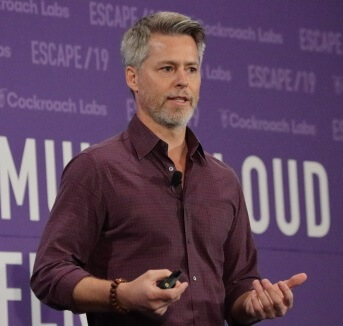
Picture: Joao-Pierre S. Ruth (file picture)
Regardless of these kinds of positives, enterprises have expressed a desire to not enable a vendor maintain sizeable sway about them, Kimball claimed. “Even if a corporation starts on AWS since that is where by they have know-how, they are incredibly eager to keep adaptability and optionality.” Advantages of working with multicloud suppliers contain the prospective to select the greatest technological innovation for precise demands, he claimed.
There is a sense of unavoidable alter on the horizon as the cloud grows in electrical power and access, even for holdouts nonetheless clutching to legacy infrastructure. Kimball claimed the evolution noticed in the very last ten years for databases is only the beginning. “That very first phase was SQL, which has been evolving for 40 years,” he claimed. “Those architectures are monolithic. They sat in one place and you had to scale up. That ran into a brick wall when the web transpired.” The discussion is now aimed at how to establish data architectures that can deal with world-wide scale, he claimed.
For extra articles on cloud infrastructure, follow up with these stories:
Review: Cloud Migration Gaining Momentum
Cloud Strategies Aren’t Just About Electronic Transformation Any longer
Up coming Actions for Cloud Infrastructure Further than the Pandemic
Predictions for Cloud Computing in 2020
Joao-Pierre S. Ruth has invested his career immersed in enterprise and technological innovation journalism very first covering area industries in New Jersey, later as the New York editor for Xconomy delving into the city’s tech startup local community, and then as a freelancer for these kinds of retailers as … Perspective Full Bio
Much more Insights
About the Author


